photo credit: Lyla Bice
Every year, children work hard to trap the magic of the tiny man dressed in green, who travels around rainbows and evades capture.
However, the modern vision of a leprechaun has evolved over centuries from its Irish and Celtic folklore. Although there are several narratives on the origin of leprechauns, one of the earliest tales depicts leprechauns as dangerous water spirits, according to History.
“Early folktales depicted leprechauns as wily, somewhat menacing male cobblers who hid their treasures. They were portrayed as cunning and untrustworthy tricksters who were often mean, delighting in leading people astray, stealing or playing harmful pranks,” according to History.
“The Saga of Fergus mac Léti”, written sometime in the eighth century, is the earliest account of leprechauns and tells the story of water spirits called lúchorpáin that attempt to attack Irish king Fergus. The spirits are captured by Fergus and are only released when they agree to grant his three wishes, according to Irish Myths.
According to Irish Myths, “The leprechauns grant the king three wishes in exchange for their freedom. But they also leave the king with a warning: to stay out of the waters of Loch Rudraige (modern day Dundrum Bay), for beneath them is the location of their fairy home. A home, as the king will unfortunately discover, that is guarded by the great Irish sea-monster known as the Muirdris.”
Although no longer associated with water, leprechauns are still known today as mischievous and clever beings that possess gold and are notoriously difficult to catch.
According to World History Encyclopedia, “Even if a leprechaun is caught, the captor must keep them always within sight or they will not give away the location of their treasure, usually a crock of gold coins. Leprechauns share many characteristics with more ancient creatures from Irish-Celtic and wider European mythology, but since the 19th century CE, they have risen to the dominant position of being the most recognisable symbol of Irish folklore.”
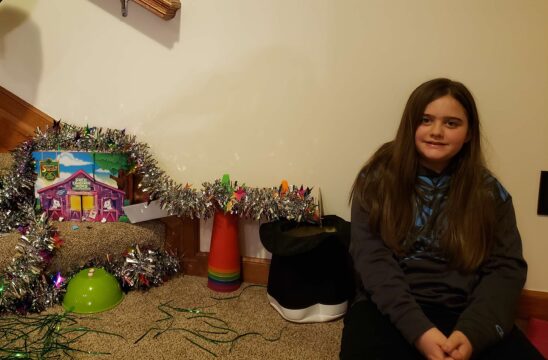
Leprechauns are now embedded in popular culture as mascots of St. Patrick’s Day, representing the spirit of the holiday. In the United States, many children have taken to building elaborate traps to try and catch these sneaky creatures. Curiously enough, this is not a tradition in Ireland and likely is driven by social media and school projects.
“In preschool, we made leprechaun traps where we got giant tissue boxes and cut an opening in the center. We would have chocolate gold coins that we would leave for the leprechaun, and we put fake grass on top of the box, so the leprechaun would fall in the hole. We came to school the next day and the grass was gone meaning we didn’t catch the leprechaun. He left us Hershey kisses,” junior Riya Pallapotu said.
Many children often devote time into building complex traps, and many teachers lead classroom activities for constructing traps. While creating these traps might seem silly, they help to strengthen skills of planning, engineering, design and other STEM skills in children.
“I remember finding a lot of materials around my house, and then me and my sister would make them together and use a lot of glitter,” freshman Cailyn Haselberger said.
On the night before St. Patrick’s Day, excited children set out their traps in hopes of being able to find a leprechaun’s pot of gold. Although they might be unsuccessful, most wake up to candy or chocolates that the leprechaun might’ve left behind.
“I would always make it the night before with a cardboard box, pillows and blankets and stuff like that. It would leave gold chocolate coins, and one year it left a bunch of green clover beaded necklaces,” sophomore Olivia Downey said.
Perhaps there will be a lucky child who may obtain the magic they seek from the little green man. But until then, the leprechaun manages to escape detainment, and continues to defend his pot of gold.