photo credit: Taylor Guzek
Comparison Culture
Scroll. Tap. Like. Repeat. For today’s teenagers, comparison is no longer limited to the classroom or the neighborhood, it lives in their pockets.
Experts from The Ohio State University say “comparison culture,” fueled largely by social media and competitive academic environments, is reshaping how young people measure success, self-worth and achievement.
“In a socially mediated world, people are able to choose how they present themselves. In most cases, they choose to only present their best, and often filtered, moments. This leads to false comparisons,” OSU Professor of Anthropology Anna Willows said.
Unlike previous generations, who may have compared themselves to classmates or siblings, teens today are exposed to carefully curated highlight reels from peers, influencers and celebrities. The result is a constant sense of falling behind.
“When they see other students making rapid advancements, it is easy to feel like they are being left behind or simply not good enough,” Willows said.
That pressure extends beyond social life and into academics. Students often believe they must excel in advanced coursework, sports and extracurricular activities to secure a spot at a top college. The message many teens receive is clear: if someone does not stand out, that person will fall behind.
“We live in a world where people feel compelled to compete with what they see on TV and other media. Instead of keeping up with the proverbial Joneses, people now feel like they need to compete with the Kardashians and so many other unrealistic lives,” Willows said.
Young people now feel pressure to compete with the glamorous and often unrealistic lives portrayed by influencers and celebrities, including figures like the Kardashians, whose content dominates digital platforms.
“Although influencers and celebrities may seem distant from everyday life, the standards they set often trickle down into high schools and social circles,” senior Hadlee Hall said.
Though celebrity lifestyles may appear exaggerated or unattainable, the ideals they promote often shape the standards teens use to evaluate their own lives.
“This spans a wide range: there is social pressure to succeed in academics and sports, but there is also social pressure to be popular, to have the right body shape or to wear the right clothes. Sometimes the same people are burdened by all of these pressures. In other cases, students might feel pressure in some areas but not care about others,” Willows said.
While comparison has always been part of adolescence, experts warn that its scale and intensity have changed. With social media providing a nonstop stream of curated success stories, teens may find it harder than ever to recognize that what they see online is often incomplete and carefully edited.
“As comparison culture continues to shape teenage life, educators and parents are being encouraged to shift the narrative. Rather than emphasizing competition alone, some advocate for conversations about personal growth, balance and redefining success beyond rankings and résumés,” Willows said.
In a world where achievement is constantly on display, the challenge for today’s teens may not be striving to succeed, but learning when to stop comparing and start defining success for themselves.
Social Pressure
Relationships are seen everywhere in many different ways. There are romantic relationships, casual relationships, long distance relationships, deep friendship relationships, work formal relationships, and so many more.
Friendships can look very different, varying on the people in the friendship, type of friendship and the length of the friendship.
“My best friends are my teammates and my school friends,” sophomore Ella Molnar said.
The definition of a best friend is “a person’s closest friend” according to the Oxford Dictionary. Best friends are the people who are there for each other no matter what.
“The person I have my closest relationship with; we are able to tell each other how we are really feeling and thinking,” sophomore Julliete Timmons said.
Now, this doesn’t always mean being nice to each other 24/7. Because in reality, this would eventually get too boring. Friends who mock each other are shown to have stronger friendships than those who don’t according to The SWDL.
“We are still kind to each other, but we can tease each other without getting offended or taking it personally,” Timmons said.
Looking for a friend can be very hard, especially for students who are older. Their brains have started to develop further, and they have a higher sense of judgment in what they want in a friend according to Psychology Today.
“I look for someone I’m able to be comfortable being myself around without feeling as if I have to mirror the other person’s personality,” Timmons said.
People have different expectations of what they want in a friend due to different emotional needs, past experiences and personalities according to Huffpost. Some want a more serious relationship, while others want one where they can make a joke about almost anything.
“I look for people who are easy to talk to and get my sense of humor,” Molnar said.
So, what is a “real” relationship if all relationships look so different?
“You shouldn’t feel uncomfortable or as if they are being constantly judged by whomever you are around,” Timmons said, “if it is a truly healthy relationship it will feel mutual for both people in the relationship.”
A big problem that comes with friendships is the judgment alongside it. Often, the fear of judgment shapes how friendships look, form and act according to Reachlink.
“People are judged by who they choose to keep company and date because it is seen as a reflection of that person,” Timmons said.
It is often said that people turn into the people they are around the most according to Riskology. Many find this harmful, however, this can be a good thing in some cases.
“Typically you are similar to the people you hang around, when you surround yourself with positive people it’s hard not to be one yourself,” Molnar said.
To keep a friendship strong and cooperative, there are a few unwritten rules to follow to stay connected according to MSN.
One rule is to “always respect each other and have a mutual understanding for each other,” Molnar said.
Social media can be a very controversial thing when it comes to relationships. Many believe social media is a negative thing that tears people apart by ceasing physical connection according to Greater Good Magazine.
“I feel as if it’s harder for some people to communicate face to face who spend more time online and on social media. Social media has also allowed people to hide behind their devices and act differently on social media than they may in person,” Timmons said.
On the other hand, social media can be one of the best forms of communication for certain people according to the University of Canada West.
“Social media can be better for long distance connection,” Molnar said.
One big problem that young adults face today is “the chameleon effect” according to Psychology Today. This is when people change who they are to fit in with the crowd. Obviously, this is a problem for many reasons.
“If someone is always changing who they are around different people in order to protect themselves, they will eventually lose who they truly are,” Timmons said.
However, using the chameleon effect to adjust tone or appearance can be beneficial in some situations.
“I think it makes you adaptable, you wouldn’t talk to a co worker the same way you talk to your best friends,” Molnar said.
Social pressure is another large issue when it comes to making and keeping friendships. Expectations are much higher for high school students as they begin to start their lives according to Thomas B. Fordham Institute.
“There’s pressure from other students or parents to take hard classes or join multiple clubs and extracurriculars or get a job,” Timmons said.
Not only this but social pressure also affects a student’s ability to communicate effectively according to Manhattan Teen and Young Adult Psychology.
“Kids our age are unable to adequately communicate with others about how they are feeling or what they need. So instead they isolate themselves,” Timmons said.
Age is another large factor that influences how relationships are formed and made. It is much easier for younger children, such as elementary age, to make friends compared to high school age students according to Talker Research.
“Middle aged adults and elderly individuals tend to struggle with connection more than kids our age because of lack of time due to work or they feel as if they do not have the opportunity to reach out and meet other people or even they feel stuck with the friends they have had for so long,” Timmons said.
The underdeveloped brain of young children can be very favorable when it comes to the task of making new friends.
“When you’re little, you are kind of friends with anyone but as you get older you learn what to look for in people and begin to develop real friendships,” Molnar said.
Future Pressure
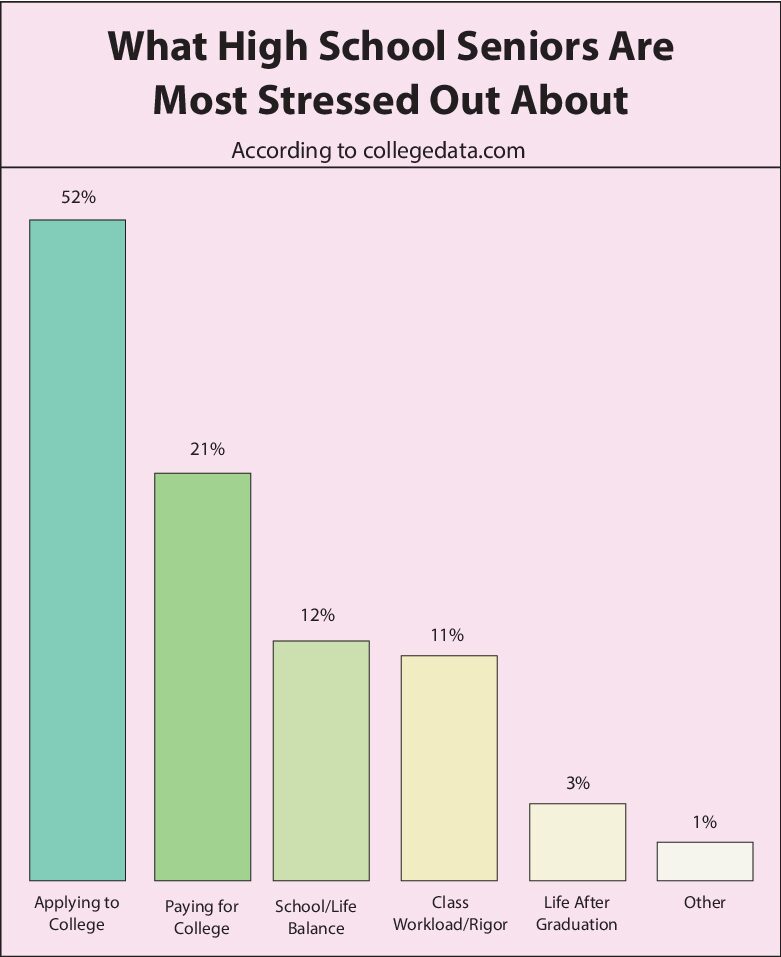
Every year in the United States, each 17 to 18 year old is presented with the daunting task of deciding what they want to do for the rest of their lives. Sometime in-between soccer practice, English homewor, and hanging out with friends, juniors and seniors planning classes and submitting their college applications feel the pressure to untangle the web of possibilities for their future as quickly as possible.
In the last 50 years, the number of students who attend college after high school has increased dramatically, and the changing landscape has led to a growing competition among high school students to get into specific colleges or pursue certain careers that require certain majors.
Senior Samira Kandhari has lived through the stresses that come with post high-school planning and has her own views on the topic.
“For me, the pressure to have everything figured out largely comes from social media and my peers,” Kandhari said. “It can be daunting to open the TikTok for you page and immediately see a video of a young girl explaining how she’s in Forbes 30 under 30. It can make someone feel behind, even though every person’s path looks different.”
These thoughts of comparison are common among many high schoolers, leading students to feel “behind” or as if they aren’t achieving enough. As they see people their age reach impressive milestones, they set unrealistic expectations for themselves, even if the things they are seeing other kids do doesn’t correlate with their lives.
Students can therefore feel a lot of anxiety surrounding their future to go down the “right path” in order to attain such milestones, even if that path isn’t for them. Additionally, these mindsets have left many students to forget that high-level college isn’t the only option they can consider.
Erin Hibbitt is a high school guidance counselor at Westland High School in the Southwestern City School district and witnessed how this rhetoric surrounding college has impacted students.
“Many schools push a college-going atmosphere, but sometimes students are not ready to go to college. Columbus State is always a good starting point, but some look down upon this college since it is a ‘community college.’ It is a wonderful starting point – smaller classes, less expensive and many great programs,” Hibbitt said. “We need to expose students to many different career pathways for students to look into. And they need to know that not all of these pathways require a college degree.”
It is also common for students to feel pressure from their parents and other adults in their lives to pursue specific degrees, colleges or career paths, adding on to the stress students feel for life after high school.
“Parents need to understand the many options that are out there and the different types of programs that colleges offer. Parents also need to understand that sometimes a year of working may be what their child needs before they can make further future decisions,” Hibbitt said. “Also, it must be their child’s dream – not the parents’ dream. Some parents try to live vicariously through their children, but if it is not the child’s passion or dream, it is not a beneficial decision for their future.”
Other stressors students have for their futures can go beyond the decisions regarding careers, college or majors but rather more social aspects.
Many students worry that by leaving high school, they will lose many of their hometown friends and struggle to meet new people and make new connections in the places they go next. The prospect of leaving family behind can also be worrisome for students.
“I worry about finding a good circle of friends and having a support system,” Kandhari said. “My parents, family and friends are my biggest supporters, and it will be hard to be in a different state without them.”
At the end of the day, making decisions and considering one’s future after high school can be overwhelming for countless students in more ways than one.
It is crucial that parents, teachers and counselors are understanding and patient during this time and offer support in limiting the pressure students feel to have things “figured out” or reach certain accomplishments.
“A lot of adults think they understand the pressures students faced because they were once students too. But the whole process of college admissions has totally changed since they were in high school, and they often don’t understand just how difficult it is to get into college now, as the competition is harder,” Kandhari said. “I wish more adults just had empathy and offered grace to high schoolers.”