photo credit: Ava Mejia
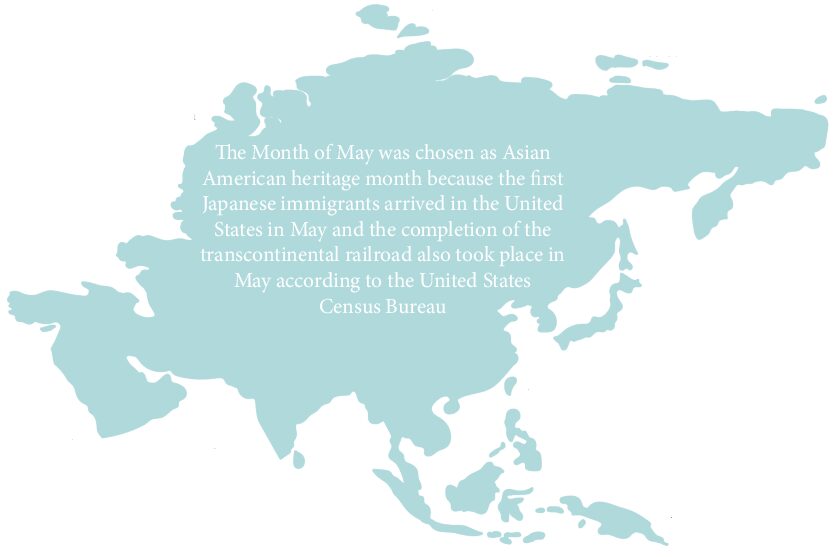
In the month of May, many people celebrate Asian culture and traditions in honor of Asian American Heritage Month. Asia is renowned for its religious culture and beautiful biodiversity, but there’s still many misconceptions and important truths that people may not know about.
Asian American Heritage Month can be celebrated in many ways here in Columbus, including the Asian Festival in Franklin Park. This festival is held May 25 through May 26, it features food vendors, cultural dancing and martial arts, making it a major event. You can also do this by simply supporting Asian markets and restaurants.
“Asia is incredibly diverse, but some of the traditions that have made their way into American culture are yoga, Tai Chi, Asian martial arts and Buddhist meditation,” Ohio University Professor for the Department of Classics and Religious Philosophy Brian Collins said.
People don’t recognize just how much Asian heritage and culture has shaped America and how it influences people everyday. For instance, yoga and meditation are incredibly popular in the United States. However, most people forget that these popular activities originate in Asia.
“The vast majority of people in the world practice a religion that originated in Asia. Islam, Judaism and Christianity come from West Asia; Hinduism, Sikhism and Buddhism come from South Asia; and Confucianism and Taoism come from East Asia,” Collins said.
According to Pew Research Center, nearly 73 percent of the world’s population live in countries in which their religious group makes up a majority of the population. That is three-quarters of the world. This means that Asian culture has majorly influenced not only American culture but also many other countries as well.
“Asia is sometimes thought of as ‘spiritual’ and ‘mystical.’ While religion is important there, it’s an exaggeration to think of it primarily as a place of meditation and mysticism,” Collins said.
Even though Asia has influenced religious practices in a great amount of ways, that’s not the only influence they have, and it can be exaggerated. Asia is the most populated continent, making it have so much more influence than just religion, but many people still form the stereotype that all of Asia is highly spiritual.
“A common misconception about Vietnamese and Asian culture is that everyone is the same, but in reality it’s very diverse with different traditions, foods and lifestyles. People also often only associate Vietnam with war or assume all families are strict,” senior Isabella Ha said.
There are many stereotypes of Asian families, but every family is different. People often get blinded by these assumptions and ignore the nuance of Asian culture and lifestyle.
“A common misconception is that India is one single, uniform culture, when in reality it is incredibly diverse. Someone living in the South can have completely different holidays from someone living in the North, and that’s really important to recognize,” junior Aashritha Saladi said.
Stereotyping is also common in India’s diversity and culture. India has many different traditions celebrated in different parts of the country. This goes for every country in Asia, there is an abundance of different cultures, rather than it being uniform.
“Today, Asia is growing faster than the West and is leading the world in developing technology,” Collins said.
People often focus on culture and religion, but Asia’s technology advancements have helped America in many ways. According to the Information Technology and Innovation Foundation, China is demonstrating dominance in robotics, leading in battery supply and innovating public health by doubling clinical biotech trials.
“The tradition and holiday I celebrate as a Vietnamese Asian is Tết, Vietnamese Lunar New Year, which is an important holiday in Vietnamese culture. It celebrates the start of a new year and is all about family, renewal and good luck,” Ha said.
There are an abundance of traditions in Asia, including Tết, and other traditions like Diwali and Chuseok. All celebrate different things and come from different people in Asia.
“Asian culture has shaped us today through food, traditions, language and values that are part of everyday life. It has influenced things like respect for family, hard work and community. Asian cuisines, holidays and art are also widely shared and celebrated around the world, helping make society more diverse and connected,” Ha said.